If you are searching for deck removal Utah homeowners can trust, you may be facing a difficult decision: can the existing deck be repaired, or is it time to tear it out and start over? The answer depends on the condition of the framing, connections, footings, stairs, and the goals you have for your outdoor space. This guide explains what to look for and how a professional assessment helps you choose a safe, practical path.
Schedule a deck removal consultation with Dynamic Deck Pros
When does an old deck need removal instead of repair?
Deck removal is usually the better direction when damage is widespread, the supporting structure has lost strength, or repeated repairs would still leave an outdated layout. A repair can make sense when the framing and house connection remain sound and the problem is limited to replaceable boards, hardware, or a small area of railing.
Start with the parts that carry the load, not just the boards you can see. Warning signs that deserve a professional review include:
- Soft, rotted, split, or badly cracked posts, beams, joists, or ledger areas
- Noticeable sagging, movement, bouncing, or a deck that feels less stable than it once did
- Stairs that shift, pull away from the deck, or have damaged stringers and landings
- Loose railings, missing balusters, or guard sections that move when pushed
- Fasteners, brackets, or connections showing advanced corrosion or separation
- Water damage where the deck meets the house, especially around the ledger
- A layout that no longer works for your household, even if parts of the structure remain usable
Surface damage alone does not tell the whole story. A deck can have attractive boards on top and still have compromised framing underneath. Conversely, weathered decking can sometimes be replaced while the main structure remains serviceable. Do not walk on an area that feels unstable, and do not rely on a visual check from the yard to decide whether a raised deck is safe.
What does a licensed contractor inspect before recommending deck removal?
A useful structural assessment traces the load path from the deck surface to the ground and checks how the deck connects to the home. Dynamic Deck Pros is a licensed and insured Utah contractor, and its evaluation should distinguish cosmetic wear from structural deterioration before recommending repair, partial removal, or full removal and replacement.
During an assessment, a contractor may review:
- Decking and fasteners: boards, screw heads, spacing, surface decay, and areas that hold water
- Joists and beams: sagging, rot, splits, unsupported spans, and signs of prolonged moisture exposure
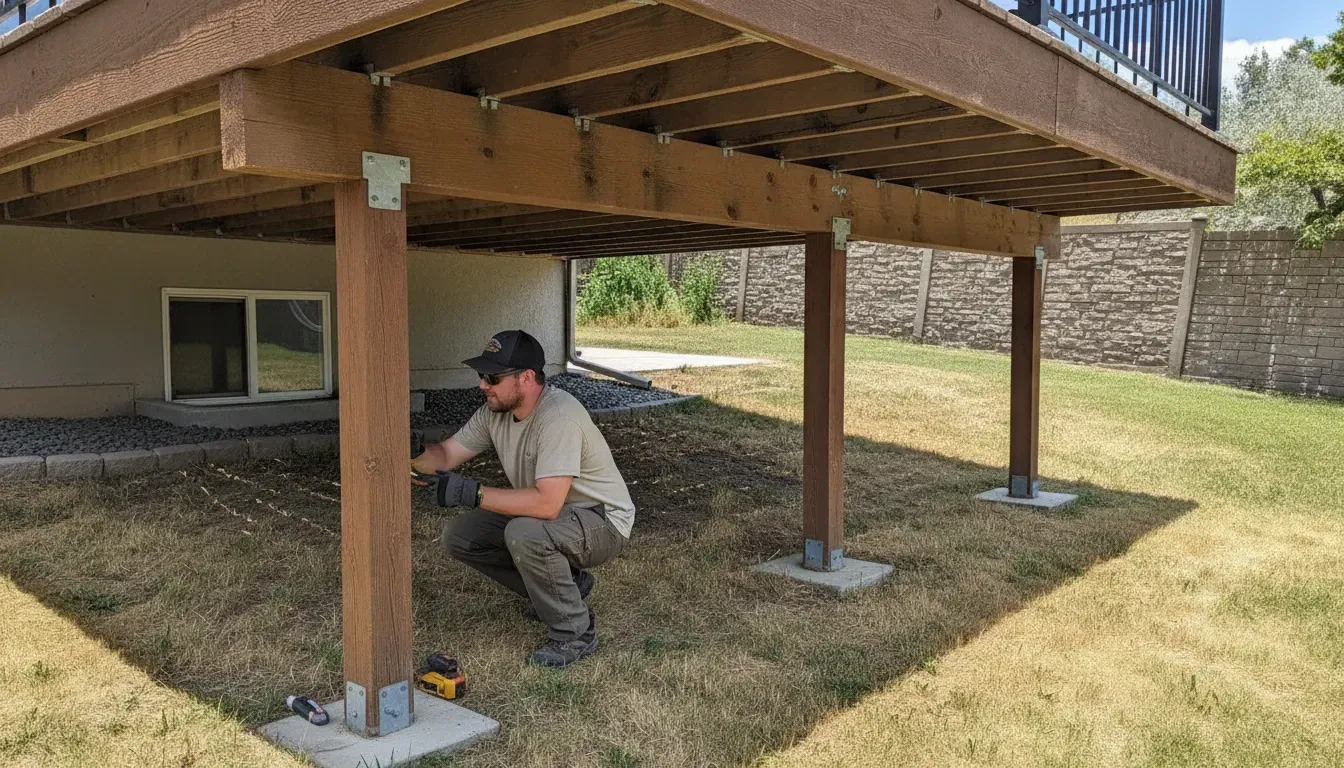
- Posts and footings: settlement, movement, decay at ground level, connection hardware, and drainage around the base
- Ledger and house connection: flashing, fasteners, separation, and water intrusion where the deck meets the home
- Stairs and guards: stringers, landings, handrails, guard stability, and safe transitions
- Site conditions: access for removal equipment, landscaping to protect, slope, drainage, and the next project’s footprint
The result should be a clear scope, not a vague recommendation to replace everything. Ask which components can remain, which must be removed, and whether the proposed work includes footings, stairs, railings, cleanup, and disposal. If the deck will be rebuilt, ask how the new plan addresses the condition that caused the old structure to fail.
Should you repair the deck or plan a full replacement?
The right choice depends on whether the existing structure can provide a reliable base for the years ahead. Repair is more reasonable when the damage is localized and the layout still fits your needs. Full removal and replacement is more practical when structural problems are distributed across the deck or when the cost and disruption of repeated repairs would not solve the underlying issue.
| Repair may fit when | Removal and replacement may fit when |
|---|---|
| Damage is limited to a small number of boards, stairs, or rail sections. | Posts, beams, joists, or the house connection show widespread deterioration. |
| The framing is stable and the current layout still works. | The deck moves, sags, settles, or has recurring structural issues. |
| Replacement parts can be installed without disturbing sound structure. | You want a new footprint, improved access, different stairs, or a new use for the space. |
| A contractor can explain the repair scope and how the finished work will be verified. | The old deck would require so many partial repairs that the result would be difficult to plan or warrant. |
These categories are starting points, not a substitute for an on-site evaluation. A partial tear-out may also be appropriate. For example, a contractor may remove an unsafe stair run or a damaged section while preserving a sound portion, if the remaining structure can be safely integrated with the planned work.
How is deck removal handled safely in Utah?
Professional deck removal is a controlled dismantling process. The crew plans the work from the top down, protects the home and yard, separates reusable and waste materials, and leaves the site ready for the next decision. The exact sequence changes with deck height, access, attachments, materials, and whether the footings are part of the scope.
- Confirm the scope: Review the deck condition, removal limits, access route, protection plan, and whether the project is removal only or removal followed by a rebuild.
- Plan permits and site requirements: Requirements vary by city and project. If the deck will be replaced, the rebuilding phase commonly involves plans, permits, and inspections. Dynamic Deck Pros manages the permit process for its deck projects.
- Protect the work area: Establish a controlled path for workers and debris, protect nearby landscaping and surfaces, and identify the safest way to take the structure apart.
- Dismantle the upper structure: Remove decking, rails, stairs, and other components in a planned order instead of allowing large sections to fall or swing.
- Remove or retain structural components: Posts, beams, joists, ledger components, and footings are handled according to the approved scope and the condition of the site.
- Load, sort, and clean: Materials are gathered, recyclable or reusable items are separated when practical, debris is removed, and the site is checked for remaining hazards.
- Review the next step: The homeowner receives a clean starting point for a new deck, another outdoor improvement, or a restored yard.
Dynamic Deck Pros describes its removal service as including consultation, a customized plan, safe dismantling, cleanup, disposal, and a final inspection. Its service page also notes that many projects are completed in one to two days once a plan is in place, although a large, elevated, restricted-access, or structurally complex deck can require more time.
Learn more about professional deck removal services in Utah
What happens to old deck materials after removal?
Disposal is part of the project, not an afterthought. Wood, composite boards, metal hardware, concrete, and mixed debris may need different handling. A responsible removal plan accounts for sorting, hauling, disposal rules, and the condition of the property after the deck is gone. Materials that can be recycled or responsibly disposed of should be handled through the appropriate local channels.
Before work begins, confirm whether the proposal includes:
- Removal of decking, framing, stairs, railings, and any included footings
- Loading and hauling of debris
- Sorting or recycling when practical
- Magnet or fastener cleanup around the work zone
- Basic grading or surface preparation, if included in the agreed scope
- Protection of gates, landscaping, siding, concrete, and other nearby features
Do not assume that every quote includes the same level of cleanup. A detailed scope helps you compare proposals without focusing only on the first number you see.
How much does deck removal cost in Utah?
There is no responsible single price for deck removal Utah projects because scope and site conditions vary significantly. The biggest planning factors are the deck’s size and height, materials, access, structural attachments, stair and railing complexity, footing work, disposal needs, and whether a new deck will be designed at the same time.
When reviewing a quote, look for a line-by-line explanation of:
- Labor for dismantling and loading
- Removal of stairs, railings, framing, and footings where applicable
- Hauling and disposal or recycling
- Permit coordination and inspection support if the project includes a rebuild
- Site protection, cleanup, and any agreed surface preparation
- Design, materials, and construction for the replacement deck, if included
Keeping removal and replacement scopes clear makes it easier to compare bids. It also prevents a homeowner from assuming that a removal-only estimate includes design, permits, new footings, or replacement construction. For a broader look at composite decking materials and planning considerations, review the composite decking guide for Utah homeowners. If a new deck is the next step, Dynamic Deck Pros can also discuss custom layouts and composite material options, including TimberTech choices, based on the home’s design and maintenance goals.
Do you need a permit for deck removal or replacement?
Permit requirements depend on the city, the existing structure, and the work planned after removal. A tear-out followed by a new deck may trigger a different review than removal that simply clears a space. Check with the local building department before starting, or ask a licensed contractor to coordinate the requirements for your project.
Utah municipalities publish different thresholds and submittal requirements. For example, Herriman’s deck guidance explains when a permit and inspections are required based on height, roof coverage, and whether the deck serves a required exit. Draper’s deck permit submission guide lists site plans, construction drawings, framing details, footing information, and house connections among the items that may be needed. These are local examples, not a statewide rule for every Utah property.
Dynamic Deck Pros states that it handles permits for its deck installation projects. Confirm the permit scope, responsible party, and inspection milestones in writing before the rebuild begins.
When is the best time to schedule deck removal and rebuilding?
The best time is determined by the deck’s safety, your project sequence, local approvals, material availability, and weather conditions. If the structure is unsafe, do not wait for a preferred season. If the deck is stable and you are planning a larger rebuild, an early consultation gives more time for design, permitting, scheduling, and decisions about materials and features.
Plan ahead when you need to coordinate:
- Temporary access to doors, stairs, or backyard areas
- Permit review and inspections
- Material selection and color samples
- Landscaping, drainage, or grading work
- Weather-sensitive excavation or concrete work
- Furniture, grills, storage, and other items that must be moved
If you are replacing the deck, the removal plan should be part of the larger construction schedule. That prevents the yard from sitting in an unfinished state longer than necessary and gives the builder a clear handoff from demolition to new construction.
Frequently asked questions about deck removal in Utah
Can part of a deck be removed instead of the entire structure?
Sometimes. Partial removal can work when the remaining framing, connections, and footings are sound and can be safely integrated with the new scope. A contractor should define exactly what remains and how the transition will be completed.
How long does deck removal take?
Timing depends on size, height, access, materials, stairs, footings, and disposal. Dynamic Deck Pros says many of its removal projects are completed in one to two days once a plan is in place, but a site-specific schedule is needed for an accurate expectation.
Can I rebuild on the existing footings?
Existing footings should be evaluated rather than assumed usable. Their location, depth, condition, settlement, and compatibility with the new design all matter. The builder and local requirements determine whether they can remain.
Should I choose new decking materials before removal?
Choosing materials early can help the contractor plan the new footprint, framing, colors, railings, and budget. You do not need every finish decision before the first inspection, but the replacement goals should be clear before the removal scope is finalized.
What should I do if my deck feels unsafe?
Keep people off unstable areas and arrange a professional assessment. Do not attempt to brace, dismantle, or carry heavy sections without the right experience and equipment. A licensed contractor can identify immediate hazards and explain the safest next step.
Whether you need a careful tear-out, a partial repair, or a complete outdoor living reset, the decision should begin with the structure and end with a clear plan. Contact Dynamic Deck Pros for a consultation about your deck removal or replacement project in Northern and Central Utah.