Deciding on deck replacement is not just a choice between keeping old boards and starting over. In Utah, a deck faces sun, winter weather, and changing moisture conditions, so homeowners should consider the structure, not just the surface. The right scope depends on what is sound, what needs attention, and how well the existing layout still serves the home.
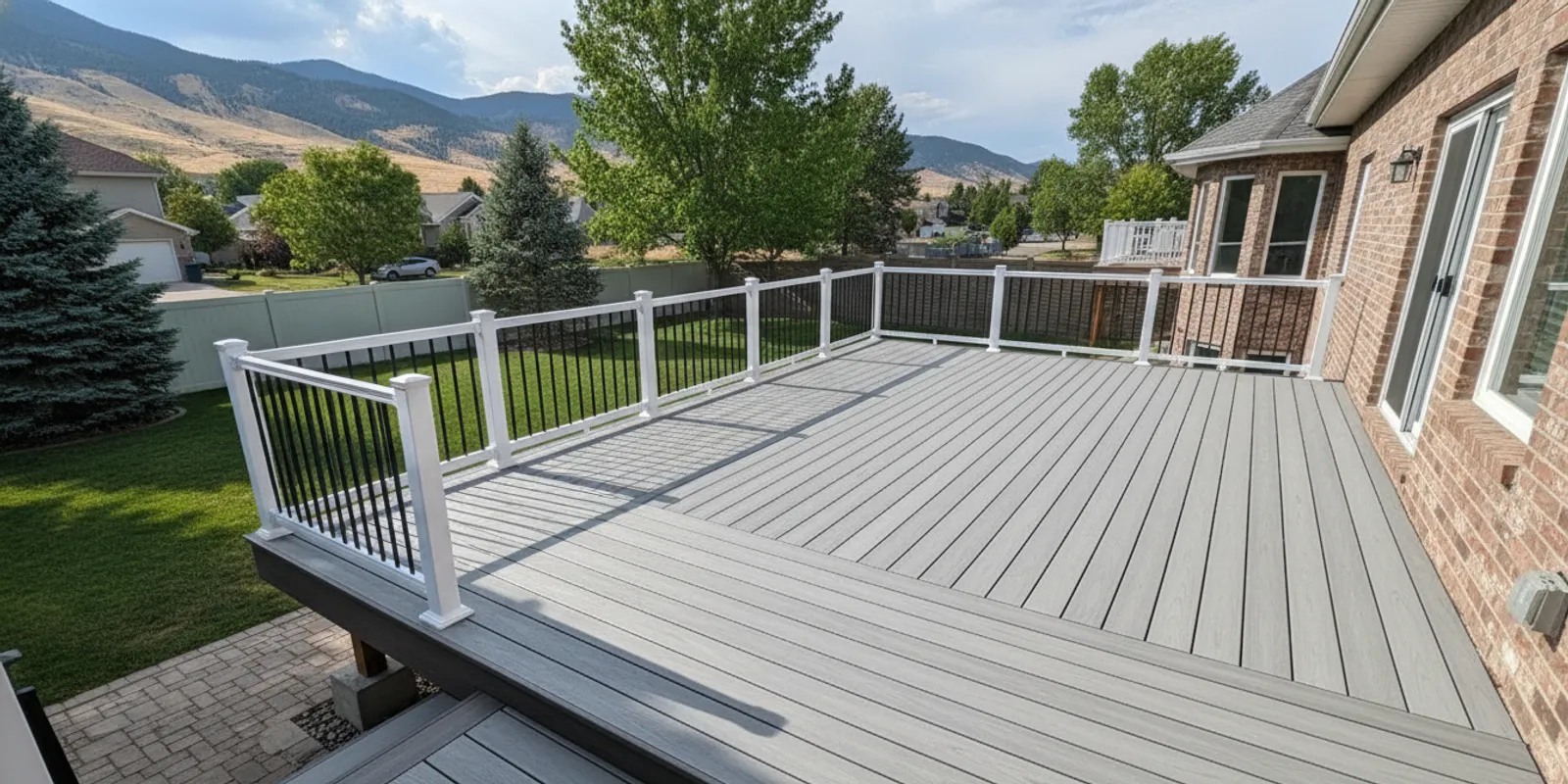
Talk with our team about your deck project
A replacement project may make sense when structural concerns reach beyond a small, isolated area, when repeated repairs no longer solve the problem, or when the deck needs a different layout. This guide walks through signs to investigate, how replacement differs from repair or removal, what to plan before rebuilding, and which questions to ask a contractor. For broader project planning, see our guide to building a new deck and our custom decking services.
When should you consider deck replacement?
Deck replacement is worth considering when a professional assessment finds that important structural components are compromised, several areas need work at once, or the deck no longer meets your needs. A single loose board or damaged trim piece does not automatically mean the whole deck should be rebuilt. The question is whether the trouble is localized and repairable, or whether the supporting structure and overall design call for a larger project.
Start by looking at the deck as a system. The walking surface, framing, connections to the house, supports, stairs, and railing all have different roles. Surface boards can look worn while the framing remains serviceable; conversely, a fresh-looking surface does not prove that hidden connections and supports are in good condition. A homeowner’s visual review can flag concerns, but it cannot establish the safety of concealed framing.
- Concerns appear in several structural areas. If multiple posts, beams, joists, or connection points show visible damage or movement, ask for a professional evaluation rather than treating each symptom as a separate cosmetic fix.
- The deck feels unstable. Noticeable movement, a sagging section, or stairs and railings that shift are reasons to stop using the affected area and arrange an assessment. Do not test a questionable structure by adding weight.
- Damage keeps returning. Repeated repairs may indicate that the source of the problem is not limited to the boards that were replaced. A contractor can help determine whether the cause is localized or part of a larger condition.
- The layout no longer works. A replacement can be an opportunity to reconsider access, stairs, circulation, entertaining space, or how the deck connects with the yard.
- The existing design limits material choices or future improvements. If you want a different surface, railing, or configuration, ask whether the current framing and layout are appropriate for that plan before assuming an overlay or partial update will work.
These are reasons to investigate, not a do-it-yourself checklist for deciding that a deck is unsafe. If you see a visibly damaged support, loose connection, severe sag, or other condition that concerns you, keep people off that portion until it has been assessed.
How do you separate deck repair from replacement?
Repair generally addresses a limited issue while retaining the sound portions of the existing deck. Replacement is a broader rebuild when the condition, design, or scope makes keeping the existing structure impractical. Neither option is automatically better. The objective is to match the work to the actual condition of the deck and the homeowner’s goals.
| Project path | When it may fit | What to clarify |
|---|---|---|
| Repair | A specific, limited component needs attention and the rest of the deck may remain serviceable. | What caused the problem, what will be repaired, and whether adjacent components need evaluation. |
| Replacement | Structural issues are widespread, the existing configuration no longer works, or a larger rebuild is the appropriate scope. | What will be removed and rebuilt, what can be retained, and how the proposed design addresses the site and intended use. |
| Removal without replacement | The deck is no longer wanted, or the owner is considering a yard or patio plan instead. | How removal will affect the house and site, and whether permits, restoration, or other work apply. |
This comparison is a starting point, not a diagnosis. A contractor should explain the observed condition and why the proposed scope follows from it. Ask for specifics instead of accepting an unexplained recommendation to patch everything or replace everything.
Some preservation guidance also favors repair when possible: a Utah historic-preservation meeting notice says deteriorated architectural details should be repaired rather than replaced whenever possible. That is a historic-preservation principle, not a deck inspection or safety standard; it can be a useful consideration for a historically significant property, but it does not determine whether a deck structure should remain in service. Read the Utah historic-preservation meeting notice.
What should you inspect before planning deck replacement?
Walk around the deck at ground level and note what you can see without dismantling anything or climbing onto a questionable area. Take photographs of visible concerns and write down when you first noticed them. Share those observations during an evaluation, but let a qualified professional assess structural conditions and identify any concealed issues.
A brief condition record makes the first conversation more useful. Note where a problem appears, whether it changes after rain or snow, and whether it seems to be getting worse. For example, a photo of a stair landing with a date and a short note about movement is more actionable than a general comment that the deck feels old. Include prior repairs or alterations if you know about them. Do not pry up boards or remove trim to get a better view; that can expose you to hazards and still may not reveal the source of a problem.
Look at supports and framing
Observe whether posts appear plumb, whether beams or joists look damaged or unusually deflected, and whether there are signs of deterioration around supports or connections. Check for visible movement where the deck meets the house, but do not try to tighten or alter structural connections yourself. Water exposure, age, prior modifications, and site conditions can all matter; a photo alone may not show the underlying cause.
Notice stairs, railings, and transitions
Stairs and railings affect how people use the deck every day. Note loose-feeling sections, damaged treads, awkward transitions, and areas where the arrangement does not fit household needs. A deck rebuild may provide a chance to plan these elements as part of the full design rather than as afterthoughts. For ideas about the stair portion of a project, review our deck stairs design and safety guide.
Consider surface condition without mistaking it for structure
Fading, splintering, discoloration, or worn boards can affect comfort and appearance. They do not, by themselves, tell you whether the underlying frame is sound. Likewise, replacing the visible surface does not resolve a structural problem if one exists below it. Ask the evaluator to distinguish surface wear from concerns involving framing, supports, or connections.
How does Utah weather affect a replacement plan?
Utah homes experience strong sun, winter weather, and seasonal changes that should be considered when selecting materials and planning the work. Conditions vary across Northern and Central Utah, and properties can differ by elevation, exposure, slope, drainage, and shade. Rather than assume every yard has the same requirements, share details about the site with the designer or contractor.
Ask how the proposed design accounts for water movement, the connection to the house, ground conditions, and the intended use of the deck. If the property has a slope, limited access, nearby landscaping, or unusual exposure, mention it early. These details can influence the layout, construction approach, and choices that need to be resolved before work begins.
It helps to think through where water goes during ordinary rain and seasonal snowmelt. Point out low spots, places where water collects, downspouts near the deck, and areas where soil appears to wash away. These observations do not replace a site evaluation, but they give the project team useful context when discussing drainage and the relationship between the deck and the house. Also identify gates, narrow side yards, planting beds, or other access constraints that could affect construction staging.
Material selection is another planning decision. TimberTech composite decking is one option to discuss if you want a composite surface; Dynamic Deck Pros identifies as a TimberTech Gold Contractor. Compare the appearance, upkeep expectations, feel, and compatibility of candidate products for your project rather than selecting by color alone. Ask which specific product line is proposed and request the applicable manufacturer information for its care and warranty terms. Wood and composite are different choices, and neither should be described as maintenance-free without checking product guidance.
For a deeper look at the tradeoffs, read our composite decking guide for Utah homeowners. The right selection depends on your priorities and the overall project design.
What should you plan before rebuilding a deck?
A replacement project is easier to evaluate when you know what you want the finished space to do. Before requesting a proposal, think about how many people typically use the deck, where you enter it, how you move between the house and yard, and whether you need space for dining, seating, or another outdoor activity.
Try mapping those activities onto the existing area before choosing a new shape. For instance, mark where a dining table would sit, allow room for people to pass behind chairs, and note whether the grill or seating would interrupt the path to the stairs. If the deck serves more than one purpose, identify which activity needs the clearest space. A quick sketch is not a construction plan, but it can help a designer understand why the current arrangement feels cramped or inconvenient. Include the yard areas you want to preserve, too, so a larger platform does not solve one problem while creating another.
- List the problems you want solved. Separate structural or maintenance concerns from design preferences. For example, note a stair location that feels awkward separately from a surface that has become difficult to maintain.
- Describe how you use the space. Consider everyday access, family gatherings, furniture, privacy, and the areas of the yard you want to keep open.
- Gather site information. Share photos, approximate dimensions if known, slope or drainage concerns, and any past work or modifications. Do not remove components to investigate unless a qualified professional directs it.
- Set material and design priorities. Identify what matters most, such as appearance, upkeep, stairs, railing style, or a connection to other outdoor features. A designer can help identify tradeoffs.
- Ask about approvals and sequence. Requirements depend on the project and jurisdiction. Ask who will confirm which permits or reviews apply and how those steps fit into the project schedule.
- Compare written proposals by scope. Look at what is included, what is excluded, the materials and design being proposed, the responsibilities for approvals, and how questions or changes are handled.
For Utah-specific permit planning, use our deck building permit guide as a starting point, then confirm current requirements for your property with the appropriate local jurisdiction. Dynamic Deck Pros says it manages permits and regulatory compliance for its projects; ask how that applies to your proposed scope and location.
Think about project sequence as well as the finished design. Removal, site preparation, any required approvals, construction, and final details may need to happen in a particular order. Ask what decisions must be made before work starts, such as finalizing dimensions, surface and railing selections, or access arrangements. If you will need to use the yard during construction, ask how access will change and whether there will be periods when the deck cannot be used. A clear schedule discussion can help you prepare without assuming a fixed duration before the contractor has reviewed the site and scope.
What should you ask a deck replacement contractor?
Good questions help you understand both the recommendation and the work behind it. Request clear answers in writing so you can compare proposals on more than a headline scope or material name.
- What did you observe that leads you to recommend repair or replacement?
- Which existing parts, if any, can be retained, and how will their condition be evaluated?
- What is included in the proposed removal and rebuild, and what is outside the scope?
- Which decking, framing, railing, and stair materials are specified?
- How will the design account for the home connection, site conditions, and water management?
- Which permits or reviews may apply, and who will coordinate them?
- What project sequence and timeline should I expect, and what could affect it?
- How will access, work areas, and protection of nearby landscaping be handled?
- What product care instructions and warranty documents will be provided?
When comparing proposals, put the scope side by side rather than comparing only the final totals. Check whether each document describes the same footprint, demolition and disposal responsibilities, materials, stairs, railing, site work, and approval coordination. If one proposal is less specific, ask what assumptions it uses and whether an item is excluded or still to be determined. For example, a proposal that names the decking but does not explain whether existing framing will be evaluated leaves an important question unanswered. Ask each contractor to clarify differences in writing, and keep a copy of the final agreed scope so design selections and responsibilities are easy to revisit.
Also ask how a recommendation could change if concealed conditions become visible during removal. A contractor may not be able to identify every hidden issue in advance, so find out how additional work would be discussed, documented, and approved. Understanding that process helps you distinguish a defined base scope from a contingency, without assuming that a change will or will not be needed.
Dynamic Deck Pros is locally owned, licensed as a general contractor and general engineering contractor, and insured. The company offers consultations and estimates for deck projects. You can learn about its outdoor construction services or view examples in the project gallery. Ask directly about the scope and timeline for your own property; project details differ.
Frequently asked questions about deck replacement
Does worn decking mean I need a full replacement?
No. Worn surface boards alone do not establish that the framing or supports need replacement. Have the full structure assessed before deciding whether a surface repair, broader repair, or complete rebuild is appropriate.
Can I keep part of my existing deck?
Possibly, if the parts you want to retain are suitable for the planned design and their condition is verified. Ask the contractor to identify what can stay and explain how that conclusion was reached.
Should I repair or replace a deck that moves?
Movement is a reason to seek an assessment, not to guess at the repair. Limit access to any area that appears unstable, and ask a qualified professional to identify the cause and recommend an appropriate scope.
Do I need a permit for deck replacement in Utah?
Permit and review requirements depend on the location and project details. Confirm them with the local jurisdiction, and ask your contractor who will handle the applicable permits and compliance steps.
How do I get a project estimate?
Share your goals, site details, and known concerns so the contractor can understand the project. Dynamic Deck Pros provides consultations and estimates; contact the team to discuss your deck and the next steps.
Request a deck replacement consultation
Plan your Utah deck replacement
The best next step is a clear evaluation of the existing structure and a plan that fits your property, priorities, and local requirements. Contact Dynamic Deck Pros to discuss your deck replacement project and request a consultation.
A thoughtful assessment can help you decide whether to repair, rebuild, or choose a different outdoor-space plan before committing to a scope.