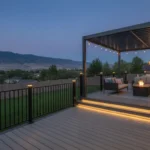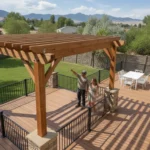
A deck color can look completely different beside your siding, under Utah’s bright afternoon sun, or against the greenery and stone around your home. The right choice should connect the house, landscape, and the way you plan to use the space, not simply follow a color trend.
Request a free composite deck consultation to discuss your Utah home’s colors, layout, and outdoor-living goals.
The best composite deck colors and styles balance your home’s architecture with local light, terrain, climate considerations, and personal taste. Compare TimberTech options and samples beside your exterior materials before choosing a single color, a two-tone design, grain pattern, or finish.
For homeowners in Northern and Central Utah, that process also means thinking about UV exposure, freeze-thaw cycles, snow, and the views from the deck. Dynamic Deck Pros can help connect those practical details to composite and custom deck options in Utah. Start by comparing collections in a way that makes differences in tone, texture, and overall character easier to see.
How Composite Deck Colors and Styles Fit a Utah Home
Comparing composite decking is easier when you look beyond a single sample board. A collection is a coordinated group of colors, grain patterns, surface textures, and finish characteristics. Start by deciding what visual role the decking should play: a quiet foundation for the home. A warm focal point for entertaining, or a bridge between the house and the surrounding landscape.
TimberTech is a useful starting point for homeowners who want composite decking with wood-inspired aesthetics. TimberTech describes its composite decking as combining organic wood fibers with post-consumer recycled plastics, and its product range includes multiple colors and wood looks. Those broad material categories matter, but the final choice should come from how a sample works with your property rather than from a color name alone. Review TimberTech’s composite material information for the manufacturer’s overview, then evaluate the actual samples at home.
Compare the color family first
Group samples into broad families such as light, medium, or deep tones, and then consider whether each one feels warm, cool, or neutral. Warm undertones can complement natural stone, tan siding, and earthy landscaping. Cooler or more neutral options may work well with gray siding, crisp trim, or a modern exterior. This is a design framework, not a universal rule. The right relationship depends on your home’s existing materials and your personal taste.
Look at variation, not just the base color
Two boards with a similar overall tone can create very different decks if their grain movement and color variation differ. Ask whether you prefer a more consistent appearance or a pattern with visible tonal movement. Also examine how the surface texture catches light. Wood-plastic composites can be manufactured in different colors, shapes, sizes, and surface textures, so a collection’s character comes from more than its dominant hue. Explore composite and custom deck options in Utah when you want help comparing those visual differences with the layout of your project.
Review the finish in real conditions
Place samples beside siding, trim, roofing, stone, and nearby plants. View them in morning light, afternoon sun, and shade. Utah’s strong sunlight can change how undertones and grain appear throughout the day, while snow and seasonal landscape changes can alter the overall contrast. TimberTech recommends ordering samples to compare its decking aesthetics at home, which makes this review more reliable than choosing from a screen.
Finally, narrow the collection to two or three candidates and discuss how each could work across the main deck field, stairs, railings, and any border detail. A thoughtful comparison creates a cohesive outdoor space instead of forcing every feature to compete for attention.
How Do You Match a Deck Color to a Utah Home?
Start with the fixed elements you are not planning to replace. Siding is usually the largest color field, but trim, roofing, stone, brick, windows, and existing railings also influence how a deck will look. The goal is not to find an identical match. A deck often feels more intentional when it complements the home through a related undertone or a controlled contrast.
Look for undertones before choosing a color
Undertone is the subtle color beneath the main shade. A gray surface may lean blue, green, or warm beige. A brown may read red, gold, or neutral. Compare deck samples beside the siding and trim rather than viewing them alone. If the home has cool gray stone or blue-gray siding, a similarly cool deck can create a calm connection. Warm tan siding may pair more naturally with a deck that has a warm brown or muted red undertone.
Trim can guide the level of contrast. A deck close to the trim color can create a coordinated, understated appearance. A deeper or lighter deck can add definition around the home, especially when the railing and border details repeat one of the exterior colors. With stone, brick, or a strongly patterned facade, a quieter deck color may keep the overall exterior from looking busy.
Include the yard, terrain, and Utah sunlight
Look beyond the house. Natural wood tones can connect a deck to mature trees, planted beds, or mountain views, while a simpler neutral can keep attention on the landscape. Consider how the deck sits on the property, including slopes, retaining walls, privacy fencing, and the views from inside the home. The same sample can appear different in morning light, bright afternoon sun, shade, and winter conditions.
Utah site conditions deserve a place in the design conversation. UV exposure, freeze-thaw cycles, and heavy snow loads are considerations that can affect material selection and long-term planning. Not promises that a particular color or product will perform identically at every home. A site evaluation can account for sunlight, terrain, drainage, and exposure before the final choice is made.
Dynamic Deck Pros serves Northern and Central Utah, and its design process considers the landscape, terrain, sunlight, views, and home architecture before refining the plan collaboratively. Explore custom deck design and material planning when you want help comparing composite deck colors and styles in the context of your actual property.
Popular Composite Deck Styles for Salt Lake County Homes
Style should do more than make a deck look current. It should support how your household uses the space, relate to the home’s architecture, and make sense on the property. In Salt Lake County, sunlight, terrain, views, landscaping, and local weather conditions can all influence the right design direction. The following styles are useful starting points, not a list of what every neighborhood should choose.
Classic and mountain-inspired designs
A classic composite deck often uses a straightforward rectangular layout, balanced railing lines, and a finish that complements the home’s existing siding, trim, roof, or stone. This approach works well when you want the deck to feel like a natural extension of the house rather than a separate focal point.
Mountain-inspired designs can take a warmer, more grounded direction. Wood-look grain, earthy color relationships, substantial-looking rails, and views toward the yard or foothills can help connect the deck to the surrounding landscape. The goal is not to copy a cabin. It is to create an outdoor space that feels appropriate for the setting while remaining consistent with the home’s scale and character.
Modern and low-profile layouts
A modern deck may use clean lines, restrained color contrast, simple railing profiles, and generous open areas for furniture. A low-profile layout can be especially effective where the deck needs to transition gently into a yard, garden, or existing hardscape. Fewer visual breaks can make a compact space feel more open, while careful grading and drainage planning remain important to the overall installation.
For homes with strong horizontal lines, a low, wide platform may reinforce the architecture. For a taller home or a property with a change in grade, a multi-level design can separate activities without requiring one oversized platform. One level might hold a dining table, while another creates room for lounge seating or a path toward the yard. Each level should feel connected, with transitions planned for comfortable movement and a cohesive view from inside the home.
Integrated outdoor-living spaces
Some homeowners need more than a place to set chairs. An integrated outdoor-living layout can coordinate the deck with a pergola, fencing, lighting, railings, cooking area, or other built-in features. These additions should be planned together so that circulation, shade, privacy, views, and maintenance access support one another instead of competing for space.
Dynamic Deck Pros develops custom plans by discussing functionality, evaluating the landscape, terrain, sunlight, and views, then refining the design collaboratively. Its Salt Lake City deck builders can help translate your preferred composite deck colors and styles into a plan that fits the property and addresses permitting or code considerations where needed.
Two-Tone Decking Ideas for a Custom Look
Two-tone decking can add definition without making the deck feel busy. The most successful combinations usually give one color the largest visual area, then use a second tone to clarify edges, movement, or architectural details. Think of the secondary color as trim: it should support the shape of the deck and the home’s exterior rather than compete with them.
A simple approach is a consistent field board with a contrasting picture frame around the perimeter. This creates a clean boundary and can make an irregular deck plan feel more intentional. A related option is to keep the field and border close in value, then introduce contrast on the stairs or fascia. That approach adds detail where people naturally look for transitions, while keeping the main walking surface calm.
Composite products can be manufactured in different colors, shapes, sizes, and surface textures, which gives a custom design more than one way to create contrast. Material research from the University of Tennessee also notes that wood-plastic composites can be formed for a wide variety of applications. That flexibility supports coordinated details such as deck boards, handrails, and privacy elements, but each component should still be evaluated for its role on the structure.
| Element | Design role | Selection tip |
|---|---|---|
| Field boards | Establish the dominant color and overall mood | Choose the tone that works best with the home’s siding, trim, and sunlight. |
| Picture frame or border | Defines the perimeter and highlights the deck shape | Use a restrained contrast that follows the layout without creating visual noise. |
| Stairs and fascia | Emphasize changes in level and finished edges | Coordinate both areas so the transition looks deliberate from the yard. |
| Railings and privacy details | Connect the deck to vertical features and outdoor rooms | Repeat a deck or trim tone selectively instead of adding a third competing color. |
Surface appearance is influenced by more than color alone. Additives, including dyes, may be used to enhance a composite product for a particular use, while lubricants can improve surface appearance, according to Oklahoma State University Extension. In practice, compare actual boards rather than relying on a small digital swatch. View the pair beside exterior materials, and check whether the contrast remains comfortable in direct sun and shade. A collaborative design review can then refine the border width, stair treatment, railing tone, and privacy details into one cohesive plan.
Why Grain Pattern and Texture Matter
Color gets attention first, but grain pattern and surface texture often determine whether a composite deck feels natural once it is installed. A board with subtle variation can sit comfortably beside stone, siding, and planting. A highly uniform or overly glossy finish may look less connected to the home, even when its basic color seems right.
Wood-plastic composites can be manufactured in different colors, shapes, sizes, and surface textures, which gives homeowners more design choices than a single flat finish. Tennessee Extension explains that these products can be made with different surface textures, so the appearance of the finished deck depends on more than the color shown on a product card.
Grain direction creates visual movement
Grain direction influences how the eye travels across the deck. Long, quiet lines can make a narrow area feel more continuous, while stronger variation can add character to a large platform. It can also affect how borders, picture-frame details, stairs, and diagonal layouts read from the yard or from inside the home. The goal is not to make every board identical. Natural wood typically has variation, so carefully selected composite boards should create rhythm without looking random.
Pay attention to how the grain changes from board to board. Some designs look understated from a distance but reveal more variation in direct sunlight. Others create a bolder visual statement. View full-size samples when possible, and consider the direction in which the boards will be installed rather than judging a small color chip alone.
Texture and sheen affect the finished impression
Texture gives a board visual depth and can influence how it looks under changing light. A low-sheen surface may appear calmer and more wood-like, while a stronger sheen can emphasize highlights and color contrast. These are appearance decisions, not guarantees about traction or maintenance. Surface texture alone should not be treated as proof that a deck will be slip-resistant in every condition. Water, ice, debris, footwear, cleaning, and installation details all matter.
Manufacturing choices also help explain why two composite products can look and perform differently. Oklahoma State University notes that additives may be used to enhance a WPC for a particular use, and that lubricants can improve surface appearance. The same extension resource explains that WPC properties depend largely on the interaction between wood and thermoplastic materials. In other words, grain, texture, and finish should be evaluated as part of the complete board system, not as isolated decoration.
Think about Utah light and long-term exposure
Outdoor boards face moisture and ultraviolet radiation, and weathering tests for decking can include moisture, UV exposure, and water spray, according to published materials research. That does not mean every product changes in the same way or that any finish is universally durable. It does mean samples deserve an outdoor review, especially in Utah, where bright sun can make undertones and surface contrast more noticeable.
Place samples near the house, view them in morning and afternoon light, and compare them beside trim, stone, and landscaping. A thoughtful review of grain pattern, texture, and sheen helps the final choice support the home’s architecture instead of competing with it.
How to Use Samples Before Choosing a Deck Color
-
Inspect the sample in morning and afternoon light. A deck color can look cooler, warmer, lighter, or more dramatic as the sun moves across the property. Set the sample where the deck will actually sit, rather than judging it under showroom lighting. Look at it in direct sun, partial shade, and the softer light near sunset. For Utah homes, pay attention to how strong sunlight changes the balance between the board color and its grain pattern. TimberTech offers multiple wood looks and recommends ordering samples so homeowners can compare the material at home. Review the source and order samples before narrowing your choices.
-
Place each sample beside the home’s fixed exterior materials. Compare the decking with siding, trim, roofing, stone, brick, and any painted doors or columns that will remain in place. Do not hold the sample by itself and decide that it is the right shade. A color that looks neutral alone may pull warm or cool beside the house. Take photos from several angles, then compare them later. The goal is not to make every surface identical. It is to create a palette where the deck feels intentionally connected to the architecture.
-
View the sample with the landscape around it. Put it near planting beds, retaining walls, fencing, and the main view from the home. Consider both the colors already present and the landscape you plan to add. Dynamic Deck Pros develops designs by evaluating the landscape, terrain, sunlight, and views, so these details belong in the color decision rather than being treated as an afterthought. A deck should support the setting and the way your family uses the yard.
-
Assess the full palette, not just the deck boards. Review the relationship between the main decking color, any border or accent, railings, stairs, furniture, lighting, and nearby structures. If two tones are under consideration, make sure the contrast helps define an area without making the design feel busy. Composite products can be produced in varied colors, shapes, sizes, and surface textures, which creates flexibility, but more choices also make restraint valuable. Choose a combination that still looks comfortable beside the home and landscape after the initial excitement wears off.
-
Review the samples on the actual site with a professional. Bring your shortlist into the design conversation and discuss how sunlight, terrain, views, snow, and the home’s architecture affect the final selection. A collaborative review can also connect color decisions to layout, drainage, stairs, railings, and permit requirements. Explore custom deck design and material planning for a site-informed plan. Before construction begins, confirm the approved palette, layout, and details with the team handling professional deck installation in Utah.
Request a free consultation to review your preferred colors, samples, and layout with a Utah deck design team before you commit to materials.
Frequently Asked Questions
How do I choose a composite deck color that fits my Utah home?
Start with the fixed elements you are not planning to replace, such as siding, trim, roofing, stone, and painted doors. Compare deck samples beside those materials in the actual outdoor light, then consider nearby trees, planting, views, and the direction of the sun. A color that looks balanced in a showroom may feel very different against a bright Utah landscape.
Can I combine two composite decking colors without making the design look busy?
Yes. Use one color for most of the field and reserve the second for a border, stair risers, picture-frame edge, or a defined seating area. Keep the contrast intentional and repeat it in a small detail, such as the railing or stair trim. A simple two-tone plan usually looks more cohesive than several competing colors.
How important are grain pattern and surface texture?
They influence how natural the boards look and how light moves across the deck. Review the grain from several angles and compare how prominent it appears in full sun and shade. Composite materials can be manufactured with different surface textures, colors, shapes, and sizes, so the visual finish deserves the same attention as the base color (Tennessee Extension, Wood Plastic Composites).
Why should I view deck samples at different times of day?
Morning, midday, and evening light can change the apparent warmth, depth, and contrast of a finish. Place samples near the home, not only on a desk, and view them after accounting for shade, reflected light, and the surrounding landscape. This is especially useful in Utah, where outdoor decking is exposed to conditions including ultraviolet radiation and moisture (Polymers, WPC weathering research).
Ready to Plan Your Composite Deck?
Choosing colors and styles is easier when you can review your home’s architecture, sunlight, landscape, and the way you want to use the space together. Dynamic Deck Pros can help you turn those ideas into a thoughtful custom deck design for your Utah home. To get started, call Dynamic Deck Pros at (801) 406-3325 to discuss your project and request a free consultation and estimate.