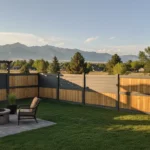
For most Utah homeowners, vinyl is the better value when a clean look and simple upkeep matter most, while composite is the better choice when you want a wood-inspired appearance, stronger impact resistance, and a premium long-term finish. The right answer depends on your yard, budget, color preferences, and how your fence will handle Utah sun, wind, snow, and temperature changes.
Contact Dynamic Deck Pros for a free fencing consultation and quote.
When comparing a vinyl vs composite fence in Utah, start with the job the fence must do. Vinyl is usually the simpler, lower-upfront-cost option for privacy, boundaries, and low-maintenance ownership. Composite costs more initially but can offer a more natural appearance and a denser, more substantial feel. A site-specific quote is the best way to compare installed options.
This guide breaks down the practical differences without pretending there is one material that fits every property. Dynamic Deck Pros helps homeowners plan fencing as part of a larger outdoor living project, including decks, pergolas, railings, and yard boundaries. See the complete guide to outdoor living structures in Utah for a broader look at how these pieces can work together.
How Are Vinyl and Composite Fences Made Differently?
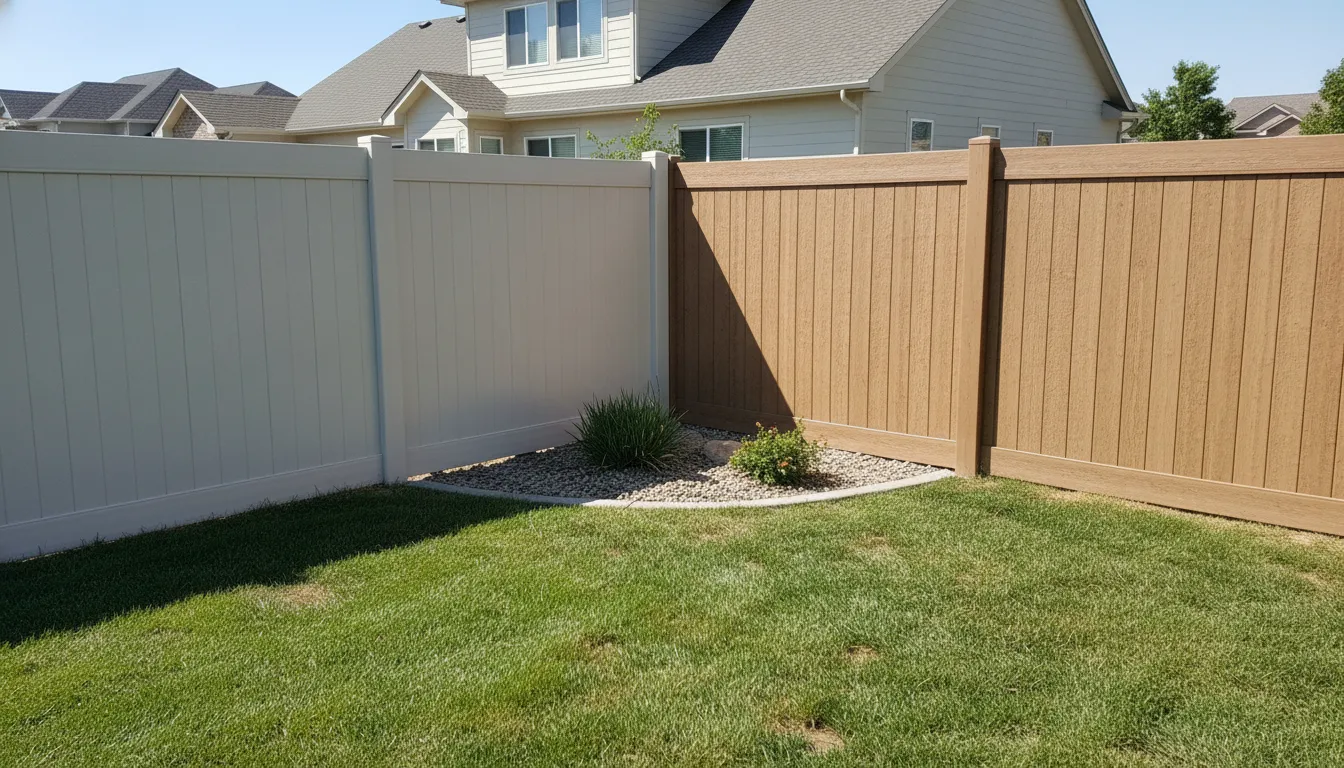
Vinyl fencing is made from a polymer material, commonly formed into smooth posts, rails, and panels. Composite fencing blends polymer with reinforcing fibers to create a denser material that can be molded or finished to resemble painted or stained wood. The construction difference affects texture, weight, color options, impact response, and the way each fence looks beside your home.
- Vinyl: Smooth, consistent, and often associated with bright white or light neutral colors.
- Composite: More likely to offer wood-look grain, deeper colors, and a heavier visual presence.
- Both: Resistant to rot and insects, with far less routine maintenance than a traditional wood fence.
- Neither: Is completely maintenance-free. Both should be inspected, cleaned when needed, and installed with the correct posts, hardware, and spacing.
Material is only one part of fence performance. Post depth, footing conditions, gate design, wind exposure, slope, and the quality of the installation can matter just as much as the panel material. A well-planned fence should also coordinate with existing decks, landscaping, drainage, and any HOA design rules.
Which Fence Costs More in Utah: Vinyl or Composite?
Composite fencing generally has the higher upfront cost because the material is denser, heavier, and often finished with a more detailed wood-like surface. Vinyl is commonly the more budget-friendly choice for the fence system itself. However, an installed price cannot be responsibly calculated from material alone because access, demolition, gates, grade changes, posts, and property layout can change the scope.
| Cost factor | Vinyl fence | Composite fence |
|---|---|---|
| Initial material cost | Usually lower | Usually higher |
| Visual finish | Clean and uniform | More texture and wood-inspired variation |
| Installation planning | Posts, panels, gates, grade, and access still matter | Heavier components may affect handling and labor planning |
| Ongoing upkeep | Periodic cleaning and inspection | Periodic cleaning and inspection |
| Best budgeting approach | Compare a complete installed quote | Compare a complete installed quote |
Do not rely on a generic price-per-linear-foot estimate as your final budget. Two fences with the same length can have very different costs if one includes multiple gates, a steep section, old fence removal, masonry, retaining work, or difficult equipment access. Dynamic Deck Pros uses a consultation and property review to develop a project-specific quote rather than publishing unsupported prices.
For a closer look at available materials and installation planning, visit the Dynamic Deck Pros fencing solutions page.
Which Material Holds Up Better in Utah Weather?
Composite is often the stronger fit for homeowners who prioritize a dense, substantial fence and a wood-inspired finish in a demanding outdoor setting. Vinyl can perform well when the system is properly selected and installed, especially when a light color and straightforward privacy design are desired. Utah’s sun, dry air, wind, snow, and temperature swings make product quality and installation details important.
Here is how the local conditions can influence the decision:
- Strong sun: Ask how the selected product is designed to handle long-term UV exposure and how color changes are addressed.
- Hot summer surfaces: Darker colors can absorb more heat than light colors, so placement and color should be considered together.
- Wind: Fence height, post spacing, footing design, and nearby exposure affect stability for either material.
- Snow and freeze-thaw cycles: Proper drainage, post installation, and clearance near grade help reduce avoidable stress.
- Dry dust: Both materials benefit from occasional rinsing or gentle cleaning, particularly along textured surfaces and gates.
A fence material cannot compensate for an undersized post, poor drainage, or a design that ignores the property slope. Ask the installer to explain the support system, gate hardware, transitions, and maintenance expectations, not just the panel color.
What Maintenance Does Each Fence Require?
Both vinyl and composite fences are low-maintenance compared with painted or stained wood, but neither should be treated as zero-maintenance. Most homeowners can expect occasional inspection and cleaning. Vinyl usually has a smooth surface that is easy to rinse. Composite may have texture or grain that holds dust more visibly, so gentle brushing can be useful when rinsing is not enough.
Vinyl fence maintenance
- Rinse away dust, pollen, and loose debris as needed.
- Use a mild cleaning approach appropriate for the product and stain.
- Inspect posts, rails, gates, and hardware after severe wind or winter weather.
- Keep sprinklers, soil, and stored materials from creating constant moisture or abrasion.
Composite fence maintenance
- Rinse and gently clean textured surfaces before residue becomes difficult to remove.
- Follow the material manufacturer’s care instructions for cleaners and stain treatment.
- Inspect the surface and support system for impact, movement, or damage.
- Keep landscaping trimmed so branches and vines do not rub against the fence.
Always check the current care and warranty information for the exact product selected. Cleaning products, finish layers, and warranty terms can differ between systems. A contractor should be able to explain what routine care is expected before you approve the material.
Which Fence Offers More Style and Color Choices?
Vinyl is a strong option when you want a crisp, uniform privacy fence or a traditional profile with a clean finish. Composite is a strong option when you want a more architectural look, deeper tones, or a surface that visually relates to a wood deck. Both materials can be used for privacy, property boundaries, screening, and carefully designed gates.
When comparing samples, view them outside rather than relying only on a small indoor swatch. Utah’s bright sun can change how a color reads next to stucco, brick, stone, decking, and landscaping. Consider these design questions:
- Should the fence blend into the yard or create contrast with the home?
- Will the fence connect to a deck, pergola, retaining wall, or existing gate?
- Do HOA rules limit height, color, location, or the finished side facing neighboring property?
- Will a dark finish make the boundary feel heavier in a small yard?
- Where should gates open, and will they provide enough clearance for people, pets, equipment, or vehicles?
Dynamic Deck Pros can also help coordinate fencing with a broader outdoor project. If a fence will meet a deck or entertaining area, review the company’s custom decking services so the transition is considered early instead of treated as an afterthought.
Is Vinyl or Composite Better for Salt Lake County and Utah County?
For many Salt Lake County and Utah County homeowners, vinyl is the practical starting point when the priority is a clean privacy boundary with predictable upkeep and a lower initial material cost. Composite may be worth the added investment when the homeowner values a wood-inspired appearance, a denser feel, darker design options, or a fence that visually complements a premium outdoor living space.
Use this quick decision guide:
- Choose vinyl when: you want a smooth, clean look, simple washing, light colors, and a more budget-conscious starting point.
- Choose composite when: you want wood-like texture, deeper color options, a more substantial appearance, and are comfortable with a higher initial investment.
- Compare both when: the fence is part of a larger project and the final choice depends on matching a deck, pergola, home exterior, or HOA requirements.
- Ask for professional guidance when: your yard has a steep grade, high wind exposure, multiple gates, an older fence to remove, or uncertain property lines.
The best choice is the material and system that fit the property, not simply the product with the most appealing brochure. A site review can uncover drainage, access, grade, boundary, and gate questions that are impossible to answer from a material comparison alone.
Frequently Asked Questions
Are composite fences better than vinyl?
Composite fences can be better when a homeowner wants a wood-inspired appearance, a denser feel, and a premium finish. Vinyl can be better when lower upfront cost, a smooth look, and simple cleaning are more important. Installation quality, color, exposure, and the fence design should be part of the comparison.
What are the downsides of composite fencing?
The main tradeoffs are usually a higher initial cost, heavier components, and a more detailed cleaning or care approach for textured finishes. Composite is not automatically the right choice for every property. Review the exact product, support system, color, warranty, and installation plan before deciding.
What are the drawbacks of vinyl fencing?
Vinyl can offer fewer wood-like texture options and may not provide the same visual weight as composite. Color, product quality, heat exposure, wind loading, and installation details all matter. A professional can help match the vinyl profile and support system to the yard instead of treating every fence design the same way.
Which fence material has the least maintenance?
Both vinyl and composite are low-maintenance compared with painted or stained wood. Each still benefits from occasional cleaning, hardware inspection, and prompt attention to impact or movement. The least-maintenance choice is the one installed correctly and selected with a finish, location, and gate design that fit the property.
How do I compare a fence quote in Utah?
Compare the complete scope, not only the material line. Check fence height and length, posts, rails, gates, hardware, demolition, hauling, grade changes, access, permits or HOA coordination when applicable, and cleanup. Ask what is included in the workmanship and material coverage, then confirm the expected timeline.
Plan Your Utah Fence With Dynamic Deck Pros
Dynamic Deck Pros is a locally owned, licensed, and insured Utah contractor serving homeowners across Northern and Central Utah. The team provides custom fencing solutions and can help evaluate material, layout, gates, and connections to the rest of your outdoor living space. The process starts with a conversation about your goals and a property-specific quote.
Contact Dynamic Deck Pros today to schedule your free fencing consultation.