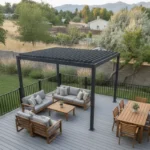
Pergola kits can look like a simple way to add shade and structure to a backyard. But the right choice depends on more than the box: your site, the space you want to use, the look of your home, and the work required to prepare and install the structure all matter. For Utah homeowners comparing pergola kits with a custom pergola, this guide lays out the practical tradeoffs and the questions to answer before committing.
Request a custom pergola consultation
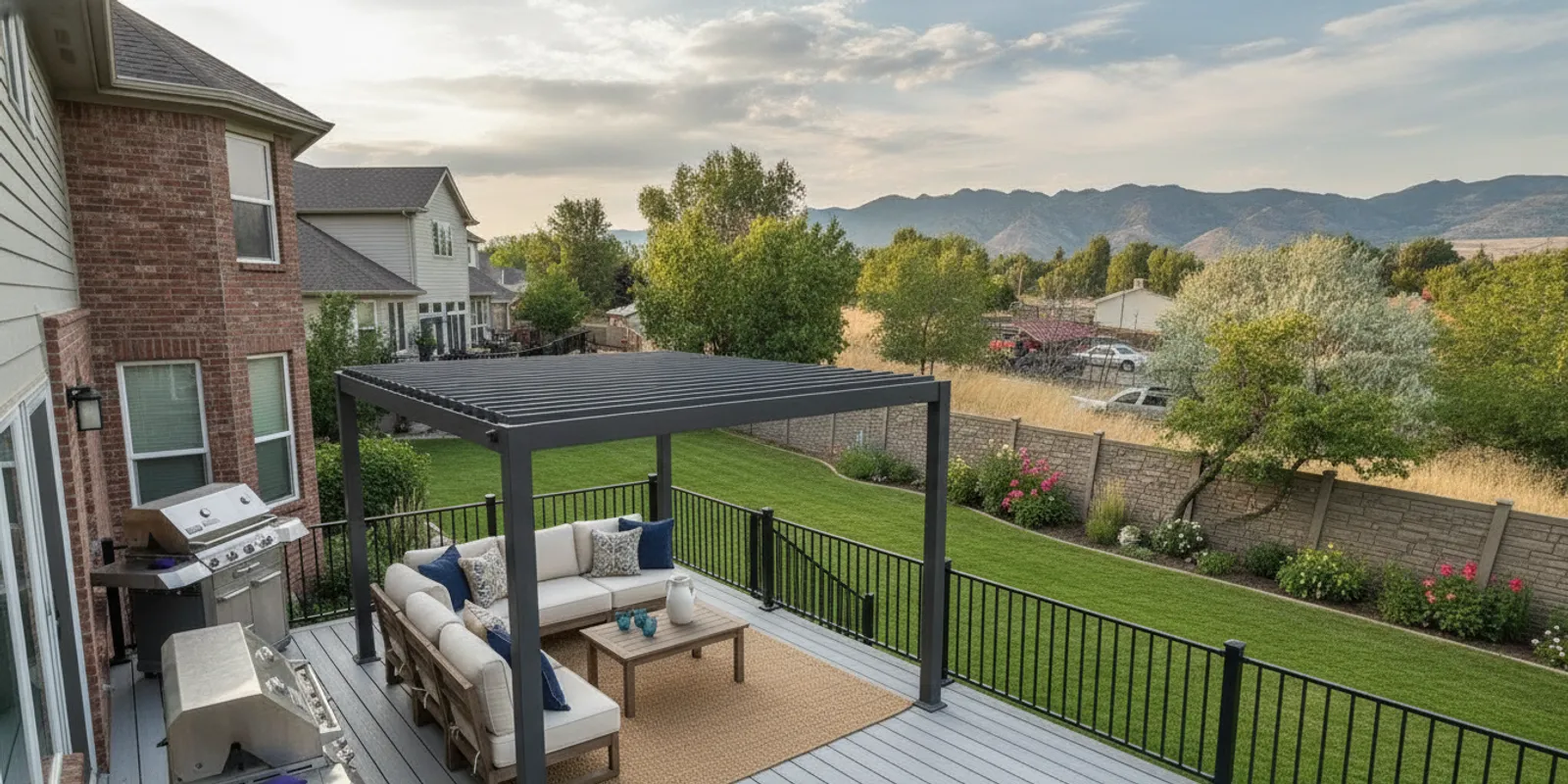
What do pergola kits and custom pergolas include?
A pergola kit is a packaged system of components sold to make a particular structure. The package may include some or most of the framing pieces and connectors, along with instructions. The exact contents, available sizes, materials, and installation requirements depend on the product. A buyer may still need to plan for delivery, assembly, supports, and any site work or approvals required for the property.
A custom pergola is planned for a particular home and site rather than selected as a fixed package. Its dimensions, placement, materials, and details can be coordinated with the yard and the way the homeowner expects to use the space. That does not mean every custom project is elaborate. It means decisions are made around the specific project instead of being limited to the dimensions and parts offered in a kit.
Both paths can create an outdoor gathering area. The useful question is whether an available kit can meet your practical needs without costly or awkward changes, or whether the site calls for more control over the design and construction. Dynamic Deck Pros offers custom pergola design and installation for Utah property owners who want a structure planned around their space.
When can pergola kits be a good fit?
A kit may suit a homeowner who finds a product in an appropriate size and configuration, has a site that can accommodate it, and is prepared to follow the manufacturer’s requirements. The more closely your space matches the kit’s dimensions and installation assumptions, the simpler the comparison is likely to be.
- You want a predefined design. A kit makes sense when its available appearance and configuration already fit your preferences.
- The dimensions work as sold. Check the footprint against the usable area, nearby doors and windows, walkways, and other planned features.
- You can verify the installation requirements. Review what the package includes, what tools or additional materials are needed, and what kind of support or anchoring the manufacturer specifies.
- You have a clear plan for assembly. Be realistic about the time, skill, help, and safe working space required to handle and assemble the components.
- The site can be prepared appropriately. Confirm whether the ground, paving, deck, or other surface can accommodate the installation as designed. Do not assume that a kit can be attached to any surface without evaluation.
Before purchasing, ask the seller for the complete parts list, product dimensions, installation guide, warranty terms, and any stated limitations. Find out whether the displayed price includes delivery or only the packaged components. A low package price is not the same as a complete installed project. You may need to account for site preparation, tools, fasteners, delivery, or professional labor separately.
Also make sure the kit is appropriate for the conditions at your property. A product description may not answer whether its proposed location, supports, or installation approach fit your site. If key requirements are unclear, get answers before ordering rather than assuming you can resolve them during assembly.
When is a custom pergola the better choice?
Custom planning can be useful when the yard does not match standard product dimensions, when the structure needs to work with an existing deck or outdoor area, or when you want coordinated decisions about appearance and function. It is also a practical path when you would rather have a contractor assess the site and manage the project than take on kit assembly yourself.
Consider a custom build if one or more of these conditions apply:
- The usable space has constraints. Trees, grade changes, property features, doors, windows, and circulation paths can affect where a pergola belongs and how large it should be.
- You need dimensions beyond a standard package. A fixed footprint may leave a narrow passage, crowd seating, or fail to cover the area you plan to use.
- The pergola is part of a larger outdoor project. Planning it alongside a deck or other outdoor elements can help the pieces work together instead of feeling like separate additions. Explore custom decking services if a deck is also part of your plans.
- You want material and detail choices considered together. Instead of choosing from one packaged configuration, you can discuss how the planned structure should fit the home and setting.
- You want help coordinating the process. Dynamic Deck Pros provides consultations and estimates, and company information states that it manages permits and regulatory compliance when applicable.
Custom does not automatically mean better for every backyard. It is most valuable when tailoring the project solves a real problem or helps coordinate choices that matter to you. If a standard kit already fits your site and priorities, custom planning may offer flexibility you do not need. If it does not fit, trying to adapt it can erase the apparent simplicity of buying a package.
How do the two options compare?
Use this comparison to identify the tradeoffs that matter most. Product details vary, so confirm the actual kit specifications and compare them with the scope of any custom proposal.
| Decision factor | Pergola kit | Custom pergola |
|---|---|---|
| Design and dimensions | Selected from the sizes and configurations offered for that product. | Planned around the intended use, home, and site conditions. |
| Site fit | Works best when the space and installation assumptions match the package. | Site conditions can inform the plan before construction details are set. |
| Assembly and labor | Often requires the buyer to coordinate assembly or hire help; verify the manufacturer’s scope. | A contractor plans and carries out the agreed construction scope. |
| Choices | Limited to available product options and compatible components. | More opportunity to coordinate dimensions, materials, and details for the project. |
| Project coordination | The buyer may need to arrange site preparation, delivery, approvals, and installation separately. | Project planning can address the work and applicable approvals as part of the consultation and scope. |
| How to evaluate price | Compare the package price with delivery, tools, additional materials, site work, and labor. | Request a project-specific quote that describes the proposed scope and related work. |
Do not compare a kit’s advertised package price with a custom project’s complete quote as though they cover identical work. Ask what each option includes and what remains your responsibility. A useful comparison puts the same project outcome on both sides: a finished pergola in the intended location, with the required site work and installation accounted for.
How can you do a practical site-fit test?
Before comparing finishes or ordering a kit, test the proposed footprint in the yard. A quick plan on paper can reveal conflicts that are easy to miss when looking at product photos. Start by measuring the intended area and marking the kit’s outside dimensions with stakes, string, or another temporary marker. Then walk around the outline as you would after installation.
- Map the everyday route. Open nearby doors, carry a chair through the access path, and check whether people can move between the house, seating, and yard without squeezing around posts.
- Place the furniture you actually use. Mark a table and chairs or lounge seating on the plan. Include space to pull chairs back and move around them, not only the furniture’s static footprint.
- Look up and around. Note windows, roof edges, trees, utility features, and landscaping that could affect placement or access. If the space is on or beside a deck, confirm how the proposed supports relate to that existing structure rather than assuming it can carry them.
- Check assembly access. Ask how long components are, where they will be unloaded, and whether there is room to stage and assemble them safely. A footprint can fit while the delivery or assembly path does not.
- Record questions, not guesses. Write down uncertain details about the surface, supports, clearances, and local approvals. Resolve those points with the product supplier, jurisdiction, or qualified professional before purchase.
For example, a rectangular kit might fit the patio dimensions but place one post in the path from a sliding door. Moving the whole structure could leave the seating area uncovered; altering the kit could conflict with the manufacturer’s instructions. A custom plan can consider the circulation route and intended seating before the dimensions are finalized. This does not guarantee one approach is right, but it makes the decision concrete: compare how each option works in the space you will actually use.
What should Utah homeowners check before buying a kit?
Utah properties differ in elevation, exposure, terrain, and local requirements. A product suitable for one yard is not automatically suitable for another. Before ordering, consider the following checks.
- Measure the actual usable area. Note the space you need for seating or movement, not just the product’s footprint. Account for doors, windows, paths, utilities, landscaping, and room to assemble the structure.
- Review the installation guide in full. Identify the specified support or anchoring approach and any restrictions on the surface or location. If the instructions do not address your situation, get professional guidance before you buy.
- Check the product’s stated conditions and care. Ask the supplier how the selected materials and finishes are intended to be used and maintained. Consider sun exposure, precipitation, seasonal weather, and the effort you are willing to spend on upkeep.
- Ask the local jurisdiction about approvals. Requirements can depend on the property and project details. Do not rely on a kit seller’s general statement as a determination for your address. Dynamic Deck Pros has a guide to pergola permit requirements in Utah, and the relevant local jurisdiction can clarify what applies to your project.
- Account for the complete project. Include delivery, site preparation, any additional parts, assembly help, and required approvals when comparing approaches.
- Plan for the finished space. Decide what you expect the pergola to do, how people will move through the area, and whether it connects to an existing outdoor living space.
For an independent example of how a local ordinance can define the term, Mount Pleasant, Tennessee’s zoning ordinance describes a pergola as an outdoor sitting area with a lattice or open-slat roof. That local definition is not Utah code or project-specific approval; check the rules for your own address. See the Mount Pleasant zoning ordinance for its wording.
How should you compare upkeep and long-term use?
A kit is not automatically lower-maintenance than a custom structure. Upkeep depends on the materials and finish selected, how the structure is installed, and the care instructions that apply to those products. Compare the actual specifications, rather than assuming all kits or all custom pergolas behave alike.
Ask these questions before making a decision:
- What routine cleaning or inspection does the manufacturer or contractor recommend?
- Do the materials require periodic refinishing or another form of care?
- Are replacement parts available if a component is damaged or worn?
- What product and workmanship warranties apply, and what conditions or exclusions should you understand?
- Will the planned location make maintenance easy, or put the structure in a spot that is difficult to reach?
Get warranty terms in writing and distinguish product coverage from installation or workmanship coverage. A kit’s warranty may depend on following specific assembly and care directions. For a custom proposal, ask which materials are included and what the contractor’s stated scope covers. Avoid relying on a broad verbal assurance when the written documents can explain the details.
Think about use across different seasons, too. A pergola may provide the open, defined gathering space you want without enclosing it. If your main goal is substantial weather protection, confirm exactly what the chosen kit or proposal is designed to provide; do not infer that a slatted or open structure will act like a solid roof. Ask how the material choice, orientation, and placement relate to sun and exposure at your home. Keeping these expectations clear can prevent disappointment that no finish or accessory can fix after installation.
How can you compare project scopes fairly?
Make a short side-by-side checklist before deciding. For the kit, write down the package contents, delivery arrangements, installation tasks, additional materials, surface preparation, and who will handle approvals. For a custom estimate, identify the proposed dimensions and materials, site work, construction tasks, exclusions, and any approvals addressed. A quote is easier to evaluate when it names the work rather than relying on a broad label such as “pergola installation.”
Then list the tasks you are willing to take on. One homeowner may be comfortable coordinating delivery and assembly but not evaluating the support surface. Another may prefer a contractor to assess the yard, define the project, and carry out the agreed work. Neither preference is inherently right; the important point is to include your own time and responsibilities in the comparison.
If an estimate leaves a question unanswered, ask for clarification before treating the options as comparable. For example, confirm whether site preparation, hauling away removed material, added components, or changes prompted by site conditions are included or excluded. The answer may change how you view the apparent price difference without requiring you to guess at costs. Dynamic Deck Pros provides custom quotes and a project timeline upfront, so homeowners can discuss the planned scope before making a decision.
What should you ask a contractor about a custom pergola?
A clear consultation should turn your goals into a defined project rather than a vague idea. Bring photos of the yard, approximate measurements, and a short list of how you expect to use the space. You do not need a finished design before asking questions.
- What site conditions could affect the location, dimensions, or construction plan?
- What is included in the proposed scope, and what work is not included?
- Which material and finish options suit the project’s intended use, and what care do they require?
- Who will confirm whether permits or other approvals apply, and how will those be handled?
- What is the expected project sequence and timeline, and what decisions must be made before work begins?
- What does the estimate include, and how are changes handled if site conditions differ from expectations?
Dynamic Deck Pros is a locally owned, licensed, and insured contractor serving Northern and Central Utah. The company offers free consultations and estimates, with custom quotes and a project timeline provided upfront. Read about its outdoor living services and Utah service areas before reaching out. To explore related planning considerations, see the guide to pergola project costs in Utah; actual project pricing is determined by a custom quote.
If you are still comparing aesthetics rather than construction approach, the separate guide to custom pergola design ideas for Utah backyards focuses on design inspiration. Keeping the two questions separate can help: first decide whether a kit or custom project suits your site, then refine the look and details.
Talk with a pergola contractor about your site
Frequently asked questions about pergola kits
Are pergola kits always less expensive than custom pergolas?
Not necessarily when you compare the complete installed project. A kit’s package price may not include delivery, site preparation, additional materials, assembly, or labor. Request a project-specific quote and compare matching scopes rather than headline prices.
Can a pergola kit be modified to fit my yard?
That depends on the product and its manufacturer’s instructions. Altering structural components or changing the specified installation may affect safety, performance, or warranty coverage. Confirm with the manufacturer or a qualified professional before changing a kit.
Do I need a permit for a pergola in Utah?
Requirements depend on the project and local jurisdiction. Confirm them for your property before buying materials or starting work. A general online guide cannot replace a determination from the authority that serves your address.
How do I decide between a kit and custom construction?
Start with site fit, the amount of assembly you want to manage, the choices you need, and the full project scope. A kit can work when its specifications meet your needs. A custom pergola is worth discussing when standard dimensions or installation assumptions do not suit your property.
Plan the pergola around your backyard
Before making a purchase, measure the usable space, read the full installation and warranty documents, confirm local requirements, and compare total project scope. If a standard kit fits your priorities, you can evaluate it on its own specifications; if it does not, a custom consultation can help define a better-fitting approach.
Request a free pergola consultation and estimate to discuss your Utah property and the options for your outdoor space.
A well-planned pergola should fit the site, support the way you want to use the yard, and make sense for the work you are prepared to manage.