For Utah homes, the best composite decking brands depend on the exact product line, sun exposure, color, maintenance plan, and installation requirements.
Trex, TimberTech, and Fiberon can each suit a different outdoor living project. The right comparison starts with the conditions around your home and ends with the board, fasteners, framing, drainage, and finish details that will be used on your deck.
Utah homeowners should also think about bright sun, dry conditions, snow, irrigation spray, dust, and seasonal temperature changes. A sample that looks balanced indoors can look very different in a backyard exposed to afternoon sun.
Contact Dynamic Deck Pros about your composite deck project
Short answer: compare Trex, TimberTech, and Fiberon by the exact collection and board. Then weigh surface protection, color comfort, appearance, maintenance, thermal movement, drainage, and installation requirements. Utah State University Extension guidance supports considering UV exposure when selecting materials for Utah outdoor spaces. Review the Utah climate guidance.
This guide focuses on practical selection rather than declaring one universal winner. For a broader overview of composite materials and project planning, read our composite decking guide for Utah homeowners. Then take the questions near the end of this article to your contractor before ordering material.
How to Compare the Best Composite Decking Brands for a Utah Deck
Start by documenting what your deck will face and how your household will use it. An uncovered deck with full afternoon sun has different priorities from a shaded, covered space used mainly for occasional meals. Neither project automatically requires the most expensive board.
- Exposure: Note the direction of the deck, hours of direct sun, nearby walls, shade structures, and irrigation spray.
- Color and comfort: Compare physical samples outdoors. Darker colors can absorb more solar radiation and may feel warmer in direct sun.
- Surface: Ask what the exact board’s cap or surface is designed to resist, and read the care instructions for that collection.
- Appearance: Review grain variation, color movement, edge details, and how the board looks beside siding, stone, fencing, and landscaping.
- Structure: Confirm that joist spacing, beams, posts, stairs, and connections are appropriate for the selected decking system.
- Water management: Plan for drainage, clearance, airflow, and the relationship between the deck and the house.
- Maintenance: Ask what cleaning is recommended and what conditions can leave stains, debris, or standing moisture on the surface.
These questions turn a brand comparison into a finished-project comparison. The lowest material price may not be the lowest long-term value, and a premium line may not be necessary for every site. A strong decision balances appearance, comfort, maintenance expectations, structural conditions, and installation quality.
Trex: Broad Selection With Important Line Differences
Trex is a familiar composite decking name with multiple product directions. That range can help homeowners compare colors and appearances within one manufacturer. It also means that the word Trex alone does not identify the board that will be installed.
Ask for the exact Trex collection
A proposal should identify the collection, color, board profile, surface construction, fastener approach, and installation instructions. Different lines can occupy different positions for appearance, surface features, and budget. Comparing a basic board with a premium capped board is not a like-for-like comparison.
Some Trex lines use a protective outer layer intended to help address common outdoor concerns such as fading, staining, and scratching. Treat those features as part of the decision, not as a replacement for cleaning or proper installation. Confirm the manufacturer’s current documentation for the exact line and review exclusions before ordering.
When Trex may fit a Utah project
Trex may suit a homeowner who wants a well-known product family and several design options to review. It can also make sense when the selected line matches the home’s exposure, color goals, comfort expectations, and budget. Place samples beside the exterior finishes in direct sun and shade. A website image cannot show how every color will read against stucco, stone, siding, or nearby landscaping.
Also ask how the installer will handle picture-frame borders, stairs, fascia, hidden fasteners, and transitions to railings. A good-looking board still needs a detailed plan beneath and around it.
TimberTech: A Choice for Refined Appearance and Surface Priorities
TimberTech deserves consideration when a homeowner places a high value on detailed wood-like appearance and a capped composite surface. The cap is designed to cover the composite core and can be relevant to a homeowner comparing surface priorities near landscaping, irrigation, shaded areas, or snow storage.
Why color and grain need an outdoor review
TimberTech boards can have pronounced grain patterns and multi-tonal color movement. Those details may create a more natural visual effect, but they do not make every color appropriate for every house. Compare full-size samples beside the roof, siding, stone, fencing, railing, and planting beds. View them in both strong sun and shade.
When a realistic wood appearance matters, look for balanced grain and a color that supports the rest of the property. Avoid choosing from a small screen image alone. The finished deck should feel connected to the architecture instead of looking like an isolated sample.
Questions for a TimberTech proposal
Ask which TimberTech collection is included, what the surface is designed to do, and what care the manufacturer recommends. Ask how the installer will preserve drainage and airflow below the deck. A capped surface does not replace sound framing, correct spacing, or a site plan that moves water away from the house.
TimberTech may be compelling when appearance and surface priorities justify the selected line. If those priorities are less important to the way the deck will be used, another collection may create a better balance. The objective is a site-specific choice, not a premium label by default.
Fiberon: Compare the Exact Line for Value and Appearance
Fiberon can be a practical option for homeowners comparing composite decking across different appearance and budget goals. Its product families vary, so evaluate the exact collection instead of treating the entire brand as one uniform board.
Review capping, color, and care requirements
Ask whether the proposed Fiberon board has a capped surface and what the manufacturer says about fading, staining, and everyday care. A capped surface is intended to add protection around the composite core, but it does not prevent every effect of furniture movement, dropped food, debris, or poor drainage.
Fiberon may appeal to homeowners who want wood-inspired aesthetics while keeping several material positions in the comparison. View samples outside, check the color beside the home, and request written installation requirements before making a final selection. The proposal should also identify the fasteners and edge treatment so the visible result matches the sample discussion.
How We Match a Composite Brand to the Home
A useful recommendation begins with the property, not a predetermined winner. Before discussing a board, a contractor should understand the deck’s size, orientation, shade, drainage, framing condition, stairs, railing, furniture, and expected use. A covered entertaining space has different priorities from an uncovered deck that receives full afternoon sun.
| Brand | Possible fit | Compare | Utah question |
|---|---|---|---|
| Trex | Several product directions | Collection, surface, color, and fasteners | How will the color look in direct sun? |
| TimberTech | Detailed grain and capped surface | Collection, moisture plan, and care | Does the grain work in sun and shade? |
| Fiberon | Wood-inspired options | Line, capping, performance, and care | Have samples been viewed near the home? |
Match the board to the design
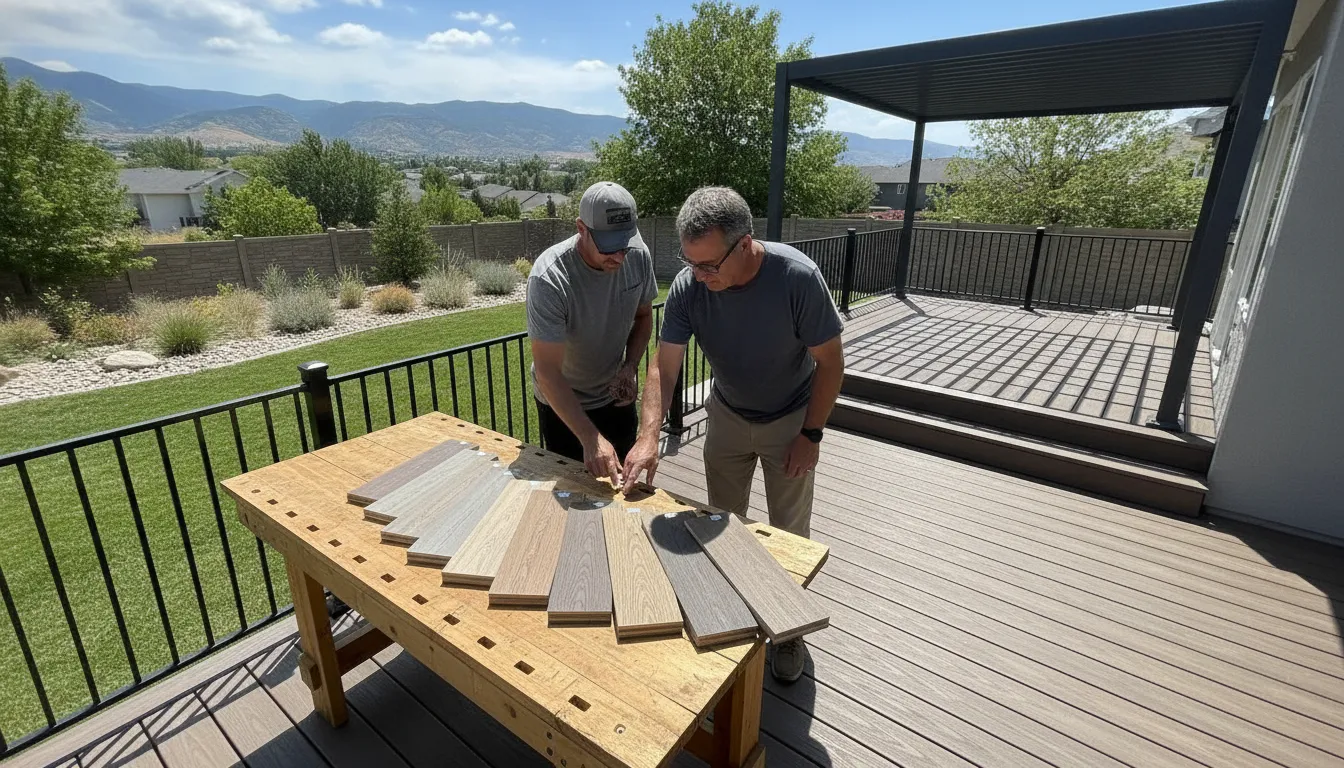
Bring physical samples into the actual outdoor space. Look at them beside the siding, roof, stone, fencing, railing, furniture, and planting beds. Photograph samples at different times of day. A multi-tonal board may become a focal point, while a quieter color may let the home’s architecture lead.
Match the installation plan to the board
Composite decking is a system, not just a visible surface. Joist spacing, end gaps, butt joints, fasteners, borders, stair details, drainage, and ventilation all affect the result. The installer should use the instructions for the selected line rather than applying a generic layout.
For a broader planning overview, see our guide to building a new deck. Dynamic Deck Pros can also connect material selection with the structure and layout beneath it through deck installation services in Utah. The purpose is to explain why a specific line fits the site and how the installation plan supports that choice.
Talk with Dynamic Deck Pros about composite decking options for your Utah home
Which Composite Decking Brand Works Best in Utah’s High-Desert Climate?
There is no universal climate winner. The most suitable choice matches the deck’s exposure, uses the required clearances, and has proper drainage and airflow. A board can have useful surface features and still perform poorly if the structure traps moisture or the installation ignores movement.
Evaluate sunlight, color, and comfort
Utah’s bright, high-altitude sun makes color retention an important topic. Utah State University Extension guidance recommends considering UV exposure when selecting materials for outdoor use. Ask for documented information about the exact line, then inspect samples where the deck will sit.
Heat is another practical consideration. Dark surfaces can feel warmer in direct sunlight. That does not make every dark board unsuitable. It means orientation, shade, barefoot use, furniture placement, and household comfort expectations deserve a place in the decision.
Plan for movement, water, and airflow
Composite boards expand and contract as temperatures change. The installer should follow the selected product’s requirements for end gaps, butt joints, perimeter spacing, and fastening. Do not assume that a spacing detail from one manufacturer applies to another board.
Water management matters below the deck as well as on top. The plan should direct water away from the house, keep framing from sitting in avoidable moisture, and preserve airflow below the boards. Review existing framing and site conditions before covering a structure. Our Utah composite decking resource provides additional context for materials, maintenance, and project planning.
What Should You Ask Before Choosing a Composite Decking Brand?
Use these questions to turn a brand comparison into a project comparison. Clear answers can reveal whether the proposed material, design, and installation plan fit your home.
- Which exact product line is in the proposal? Ask for the collection, board profile, color, and surface description.
- Can I view full-size samples outdoors? Compare them near the home in direct sun and shade.
- How will the color affect summer comfort? Discuss shade, orientation, furniture, and barefoot use.
- What installation instructions apply? Confirm spacing, fasteners, joist layout, edge details, and stair requirements.
- How will the design handle thermal movement? Ask how joints and fixed edges will follow the selected line’s requirements.
- Can the existing framing support the decking? Request an evaluation of joists, beams, posts, connections, and overall condition.
- How will water and air move below the deck? Review drainage, clearance, ventilation, and the relationship to the house.
- What maintenance and warranty documents apply? Request the manufacturer’s documents for the exact line, including exclusions and care instructions.
A contractor’s answers should be specific to your site. Statements such as “all composite decking works the same” are not enough. The board, structure, fasteners, color, and installation details should form one coherent plan.
Frequently Asked Questions
Which composite decking brand is best for a Utah home?
No single brand is best for every Utah home. Trex, TimberTech, and Fiberon can each be appropriate when the specific line, color, surface, site exposure, and installation plan match the project. Compare documented product features and samples, then evaluate the structure and drainage before choosing.
Is TimberTech better than Trex or Fiberon?
TimberTech is not automatically better than Trex or Fiberon. It may be a strong fit when detailed grain and a capped surface are important. Trex may fit a homeowner who wants several familiar product directions, while Fiberon may fit a homeowner comparing value and appearance across product lines. The exact board matters more than a brand ranking.
What composite deck color is best for Utah summers?
The best color depends on sun exposure, shade, home finishes, and comfort preferences. Darker boards can feel warmer in direct sun, while lighter or multi-tonal colors may create a different look in the landscape. View physical samples outdoors at several times of day before ordering.
Does composite decking require maintenance?
Composite decking usually requires less routine maintenance than many wood surfaces, but it is not maintenance-free. Follow the care instructions for the selected line, remove debris, address spills promptly, and protect the deck from avoidable standing moisture. Ask the installer for a realistic cleaning and inspection schedule.
Contact Dynamic Deck Pros to review your composite decking choices
Ready to Choose the Right Composite Decking Brand?
A best composite decking brands comparison should end with a site-specific decision, not a generic winner. Dynamic Deck Pros can help you compare samples, consider Utah sun and seasonal conditions, and connect the selected material to a sound deck design. Contact us to discuss your project.